
White-Label Merchant Services: What It Is, Types & Benefits of Using Them
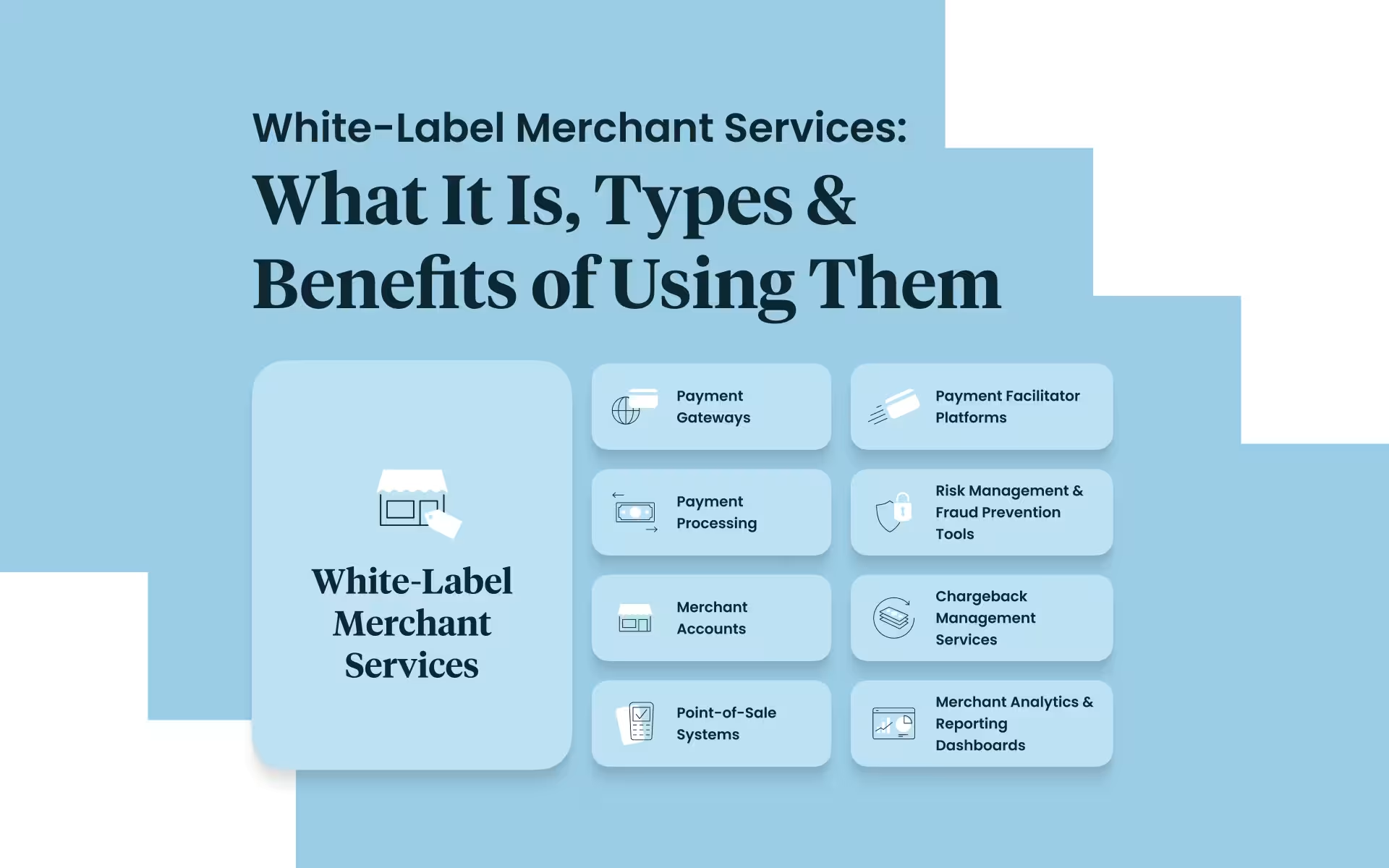
White Label Merchant Services is a business-to-business partnership model where a payment processor provides merchant services to companies and resellers who rebrand these services under their own company name and logo. White-label merchant services include payment gateways, backend payment processing, merchant accounts, POS systems, PayFac platforms, fraud and risk tools, chargeback management, and analytics dashboards.
The main benefits of implementing white-label merchant services are accelerated market entry, enhanced brand control, recurring revenue generation, reduced compliance burden, enhanced payment options, and access to expertise, support, and reporting tools.
This article covers what white-label merchant services are, which services can be white-labeled, and why companies choose the model.
What are White-Label Merchant Services?
White Label Merchant Services is a business-to-business partnership model where a payment processor provides merchant services to independent sales organisations (ISOs), software companies, or other resellers who rebrand these services under their own company name and logo. Resellers offer complete payment processing solutions without building the underlying infrastructure, maintaining PCI compliance, or securing direct processor relationships. The processor handles transaction processing, underwriting, risk management, and regulatory compliance. Regulatory compliance and all backend operations remain with the processor, while resellers manage client relationships and set their own pricing structures.
In a White Label Merchant Services arrangement, resellers receive access to payment processing technology, branded merchant portals, and dedicated support infrastructure. This support infrastructure appears entirely under the reseller’s brand identity. The processor provides API access for integration, white labelled dashboards for merchant management, and backend systems for transaction monitoring and reporting. Transaction monitoring and reporting give resellers full visibility without managing the underlying systems. The reseller owns the merchant relationship and serves as the named service provider on all merchant communications, statements, and support channels.
What is a White Label Payment Gateway?
A White Label Payment Gateway is a customisable payment processing platform that enables businesses to offer branded payment acceptance services using third-party infrastructure. Third-party infrastructure removes the need to develop proprietary technology or obtain direct acquiring bank relationships. Businesses operate as full-service payment providers without the capital investment required to build payment processing technology from the ground up.
White Label Payment Gateways facilitate the secure transfer of transaction data between merchants, customers, acquiring banks, and card networks. Card networks and acquiring banks receive this data through customisable API endpoints and hosted payment pages.
What are the Different Types of Merchant Services that can be White-Labelled?
The different types of merchant services refer to the various payment acceptance infrastructure that resellers rebrand under their own company identity. The 8 different types of merchant services that can be white labelled are:
1. White Label Payment Gateways
2. White Label Payment Processing
3. White Label Merchant Accounts
4. White Label Point-of-Sale (POS) Systems
5. White Label Payment Facilitator (PayFac) Platforms
6. White Label Risk Management and Fraud Prevention Tools
7. White Label Chargeback Management Services
8. White Label Merchant Analytics and Reporting Dashboards
1. White Label Payment Gateways
White Label Payment Gateways facilitate the secure transfer of transaction data between merchants, customers, acquiring banks, and card networks. Card networks and acquiring banks receive this data through customisable API endpoints and hosted payment pages, reducing failed transactions and protecting revenue at every stage. The gateway provides tokenisation technology that converts sensitive cardholder data into encrypted tokens, 3D Secure authentication protocols for fraud prevention, and real-time transaction authorisation routing across multiple payment processors.
White label payment gateways include multi-currency support that enables merchants to accept payments in different currencies with automatic conversion rates. More advanced payment gateways provide recurring billing engines for subscription-based businesses. Resellers can customise the gateway interface with their own branding elements, domain names, and user experience flows.
2. White Label Payment Processing
White label payment processing is the backend transaction authorisation and settlement infrastructure that resellers brand as their own payment processing service. The processing platform connects directly to acquiring banks and card network authorisation systems. These systems approve or decline transactions based on available funds, fraud scores, and merchant risk parameters.
White label payment processing includes batch settlement that transfers approved transaction funds from issuing banks to merchant accounts. Resellers establish their own pricing structures by marking up the wholesale buy rates provided by the processor. Buy rates and sell rates create a margin from which resellers receive residual income.
3. White Label Merchant Accounts
A white-label merchant account is a merchant account provided by a licensed acquiring bank or payment service provider but branded, marketed, and managed under a third-party company’s identity. The third party leverages an existing payments provider’s acquiring capabilities, merchant onboarding, risk management, and settlement processes, while controlling the customer experience, branding, and often pricing. The white label provider handles regulatory compliance, card network registrations, and funds settlement operations.
4. White Label Point-of-Sale (POS) Systems
White label point-of-sale systems are hardware and software solutions that process in-person card transactions and manage retail operations under the reseller’s brand identity. Resellers customise the POS interface with their own logos and color schemes, integrate the system with their branded payment gateway and offer merchants a unified commerce solution. White-label POS software systems can provide inventory management that tracks product stock levels, generates reorder alerts, and sales performance tracking.
5. White Label Payment Facilitator (PayFac) Platforms
A white-label payment facilitator, white-label PayFac, is a payment facilitation solution where a licensed PayFac provides its infrastructure, compliance, and acquiring capabilities to a third party, which then offers payment facilitation services under its own brand. The third party onboards and manages sub-merchants, while the underlying PayFac handles regulatory requirements, underwriting frameworks, and transaction processing.
White label PayFac platforms include built-in compliance monitoring tools that screen transactions for suspicious activity patterns, and use reserve management systems that hold funds from high-risk sub-merchants to cover potential losses. Resellers assume full liability for all sub-merchant processing activity and comply with card network registration requirements for payment facilitator programs.
6. White Label Risk Management and Fraud Prevention Tools
White label risk management tools provide real-time transaction monitoring and fraud detection capabilities that resellers offer under their own branded security services. The risk platform analyse transaction patterns and identifies anomalies indicating potential fraud, and geolocation verification that compares the cardholder’s billing address with the transaction origin location. Other advanced systems use velocity checks that flag unusual transaction volumes or frequencies from the same card or IP address.
7. White Label Chargeback Management Services
White label chargeback management services are dispute resolution platforms that help merchants respond to payment disputes and reduce chargeback ratios under the reseller’s branded support offering. The chargeback platform provides automated alert systems that notify merchants immediately when a customer initiates a dispute with their issuing bank, giving merchants the opportunity to issue refunds before chargebacks are officially filed and incur penalty fees.
White label chargeback management services include evidence collection tools that gather transaction receipts, delivery confirmations, customer communications, and terms of service documentation required to contest illegitimate disputes.
8. White Label Merchant Analytics and Reporting Dashboards
White label merchant analytics dashboards are business intelligence platforms that aggregate payment data and generate performance reports under the reseller’s branded interface. The analytics platform provides transaction volume reporting that breaks down sales by payment method, card type, and authorisation status. White label merchant analytics dashboards typically include real-time monitoring displays that show current transaction activity, authorisation success rates, and system uptime status.
What Types of Businesses use White-Label Merchant Services?
The types of businesses that use white label merchant services are outlined below:
1. Independent Software Vendors (ISVs)
Independent Software Vendors are companies that develop and sell software applications for specific industries. ISVs need white label merchant services to embed payment processing directly into their software products, creating integrated payment experiences that eliminate the need for separate third-party payment providers.
2. Financial Institutions
Financial institutions are banks that provide business banking services including current accounts, loans, and cash management solutions to commercial customers. Banks and credit unions need white label merchant services to offer branded payment processing to their business customers without building proprietary payment technology or maintaining direct card network certifications.
3. Independent Sales Organisations (ISOs)
Independent Sales Organisations are registered businesses that sell merchant services and maintain direct relationships with acquiring banks and payment processors to offer payment processing solutions. ISOs need white label merchant services to operate as branded payment service providers rather than third-party sales agents, allowing them to build proprietary brand equity and control all customer-facing interactions. This model provides ISOs with complete control over pricing structures, enabling them to maximise profit margins by setting their own sell rates above wholesale buy rates.
4. E-commerce Businesses
E-commerce businesses are online retailers that sell products or services directly to consumers through digital storefronts and require integrated payment processing for transaction acceptance. E-commerce businesses need white label merchant services such as white label payment gateways to offer customers a seamless checkout experience under their own brand without redirecting to third-party payment pages that can increase cart abandonment rates.
5. Online Platforms and Marketplaces
Online platforms and marketplaces are digital platforms where multiple vendors sell products and services through a centralised system. Platforms and marketplaces need white label merchant services to process payments securely across all vendors, split transaction amounts between sellers and the platform, and deposit funds to individual vendors while maintaining a unified payment experience.
What Are The Benefits of Implementing White-label Merchant Services?
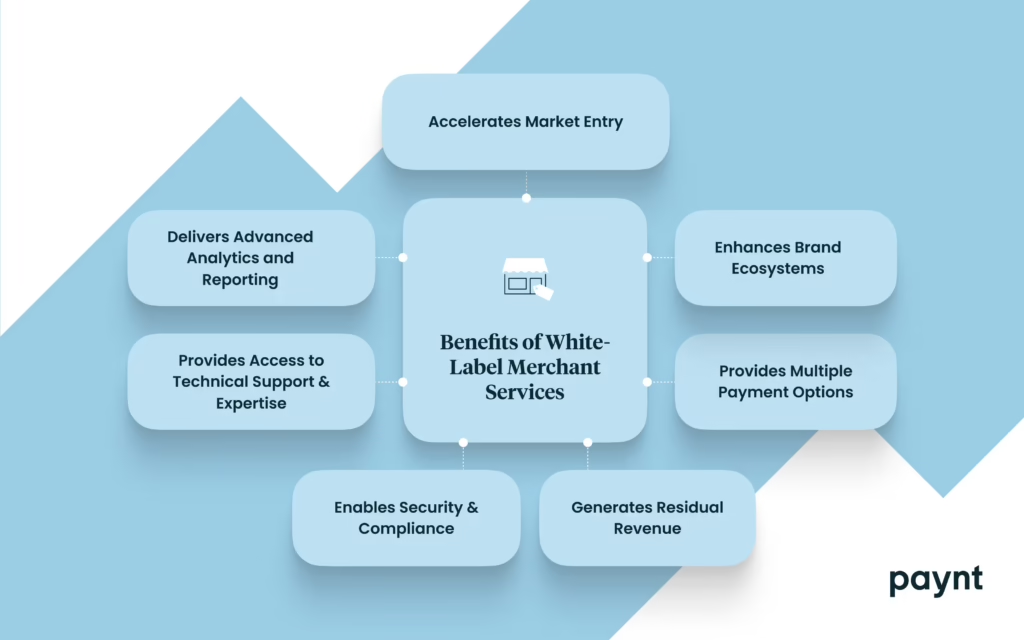
The benefits of implementing white-label merchant services include accelerated market entry, enhanced brand control, multiple payment options, recurring revenue generation, security and compliance, access to technical expertise, and advanced analytics and reporting. The benefits of implementing white-label merchant services are explained in detail below:
- Accelerates Market Entry: Resellers reduce time-to-market by eliminating the need to build proprietary payment technology, obtain card network certifications, or establish direct acquiring bank relationships.
- Enhances The Brand: Businesses can offer cohesive end-to-end payment experiences under their own corporate identity.
- Provides Multiple Payment Options: Merchants receive credit cards, debit cards, ACH transfers, and digital wallets through a single integration. Subscription based businesses gain access to recurring payment functionality that automates monthly charges.
- Generates Residual Revenue: Resellers create recurring income streams through monthly processing fees and transaction based revenue sharing. Revenue sharing is built on markup pricing between wholesale buy rates and retail sell rates.
- Enables Security & Compliance: White Label Merchant Services shift PCI DSS certification, card network compliance audits, and regulatory reporting obligations to the primary service provider. The primary service provider maintains these certifications on the reseller’s behalf.
- Provides Access to Technical Support & Expertise: White-label merchant services provide resellers with dedicated technical support teams, payment processing specialists, and integration engineers who handle merchant troubleshooting.
- Delivers Advanced Analytics and Reporting: Business intelligence tools provide transaction analytics and revenue forecasting. Revenue forecasting, customer behaviour insights, and performance metrics appear under the reseller’s branded dashboard.
What White-Label Merchant Services Does Paynt Offer?
Paynt delivers White Label Merchant Services for businesses that launch and scale their own branded payment offering without building infrastructure from scratch.
Payment Gateway
Paynt provides a fully customisable payment gateway with secure transaction routing, tokenisation, and flexible API integrations. Flexible API integrations deliver a branded checkout experience across all online channels.
Payment Processing & Acquiring
Paynt supports end-to-end payment processing, including authorisation and settlement, with direct access to acquiring capabilities. This enables partners to monetise transactions while Paynt manages the underlying infrastructure.
Risk Management & Fraud Prevention
Paynt includes real-time fraud detection and risk monitoring tools that help identify suspicious activity, reduce fraud exposure, and protect merchant accounts.
Chargeback Management
Paynt provides tools to manage and respond to disputes efficiently, including alerts, automated workflows, and evidence collection to help reduce chargeback ratios.
