
Merchant Service Provider: What It Is, Key Features & How It Works
A Merchant Service Provider is a third-party financial intermediary that enables businesses to accept, process, and settle electronic payments across card-present and online channels. Merchant Service Providers connect merchants, acquiring banks, issuing banks, and card networks like Visa and Mastercard through secure payment infrastructure.
There are many different types of Merchant Service Providers including; payment processors, payment gateways, Independent Sales Organisations, payment facilitators, acquiring banks amongst others. The benefits of working with a Merchant Service Provider are primarily through expanded payment acceptance, accelerated cash flow, and streamlined transaction processing that improve operational efficiency.
In this article we discuss what a merchant service provider is, how it works, the different types of providers and the benefits of using a merchant service provider.
What is a Merchant Service Provider?
A Merchant Service Provider (MSPs) is a company that is a third-party financial intermediary enabling businesses to accept and process electronic payments such as credit cards, debit cards, and online transactions. This provider establishes the core technical and financial infrastructure required to transfer funds between businesses, customers, banks, and payment card networks.
Merchant Service Providers deliver merchant services to businesses to help improve payment operations beyond the core infrastructure of processing payments. These providers supply hardware and software such as POS terminals, mobile card readers, and payment gateways. They facilitate online transactions through e-commerce integration, virtual terminals, and recurring billing systems. MSPs ensure security and compliance through PCI-DSS certification, end-to-end encryption, and tokenisation that protect cardholder data throughout the transaction. Additional value-added services include fraud prevention tools, chargeback management, analytics reporting, and dedicated customer support.
What are the Key Features of Merchant Service Providers?
The key features of merchant service providers are listed below:
- Payment Processing: Merchant service providers process payment authorisation requests by transmitting transaction data from the point of sale to card networks and issuing banks for approval or denial.
- Merchant Accounts: MSPs provide merchant accounts that function as designated bank accounts where customer payments are deposited before transfer to the business’s account.
- Hardware and Software Solutions: MSPs supply hardware solutions such as card readers, POS terminals, and software platforms including virtual terminals for online payments.
- Security & Compliance: MSPs secure payment data through encryption, tokenisation, and PCI DSS compliance protocols to protect cardholder information and prevent fraudulent transactions.
- Reporting and Reconciliation Tools: MSPs provide dashboards that enable businesses to track payment flows, transaction fees, and settlement schedules for financial management and reconciliation.
- Multichannel Payment Acceptance: MSPs enable payments across POS systems, e-commerce platforms, mobile applications, and contactless technology to accommodate diverse customer payment preferences.
- Customer Support & Settlement: MSPs provide technical troubleshooting, reconciling settlements, manage chargebacks, and disburse funds on time to ensure uninterrupted business operations and cash flow.
What is the Difference Between a Merchant Service Provider vs a Merchant Account?
The difference between a Merchant Service Provider and a Merchant Account is that a Merchant Service Provider is a business entity that delivers payment processing services including card terminals, payment gateways, and merchant account management whilst a Merchant Account is a specific type of bank account that holds funds from card transactions before settlement to the merchant’s business account. A Merchant Account is one component within the broader services an MSP offers.
What is the Difference Between a Merchant Service Provider vs a Payment Gateway?
The difference between a Merchant Service Provider and a Payment Gateway is that a Merchant Service Provider is a business entity that delivers a full suite of payment services including POS terminals, payment gateways, and settlement management whilst a Payment Gateway is a specific technology that securely transmits transaction data between the merchant and the acquiring bank for authorisation. A Payment Gateway is one component within the broader services an MSP offers.
How Does a Merchant Service Provider Work?
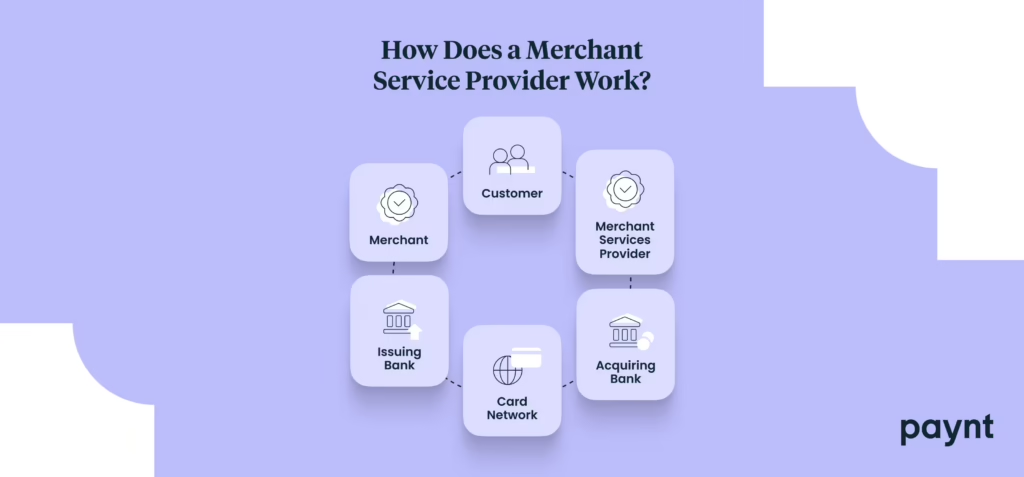
Merchant Service Providers work by establishing the technical infrastructure that connects merchants to banks and card networks for payment processing. The process begins when a customer presents their payment card or digital wallet at a POS terminal or online payment gateway, which captures payment data. The terminal or gateway encrypts payment data preventing unauthorised access to sensitive card numbers. The encrypted transaction data transmits to the Merchant Service Provider, which routes the information through the card networks Visa or Mastercard to the customer’s issuing bank. The issuing bank verifies available funds, checks for fraud indicators, and returns an approval or decline decision through the same chain.
The Merchant Service Provider collects authorised transactions throughout the day, batching them for settlement processing. The settlement process deducts applicable fees and deposits funds directly into the merchant’s designated bank account, typically within 24-48 hours.
What are the Different Types of Merchant Service Providers?
The different types of Merchant Service Providers are categories of payment processing companies classified by their service scope, target markets, and operational infrastructure. The nine different types of Merchant Service Providers are listed below:
- Traditional Merchant Services Providers
Traditional Merchant Services Providers are companies that deliver payment processing services primarily for brick-and-mortar businesses through in-person payments. These providers supply POS systems, card readers, and payment terminals that facilitate face-to-face transactions between merchants and customers in retail environments.
- Payment Gateways
Payment Gateways are providers that specialise in processing online payment transactions for e-commerce businesses by securely capturing and transmitting cardholder data from websites to payment processors. These providers enable businesses to accept credit card and electronic payments through their digital storefronts.
- Independent Sales Organizations (ISOs)
ISOs are third-party companies that partner with acquiring banks or financial institutions to resell merchant services without directly underwriting merchant accounts or holding funds. These providers offer comprehensive service suites including payment processing, POS systems, and business tools by working with multiple processing partners.
- Payment Processors
Payment Processors are backend technology companies that handle the technical infrastructure for transaction authorisation and settlement by transmitting encrypted payment data between merchants, acquiring banks, card networks, and issuing banks. These providers manage the routing, processing, and reconciliation of electronic payment transactions across all channels.
- Mobile Payment Processors
Mobile Payment Processors are service providers that deliver payment processing solutions for businesses that require payments through smartphones, tablets, and card readers. These providers enable food trucks, market vendors, and mobile service businesses to accept payments anywhere using compact hardware and mobile applications.
- All-in-One Payments Platforms
All-in-One Payments Platforms are service providers that combine payment processing, Point-of-Sale systems, inventory management, customer relationship management, and business analytics into a single integrated solution. These providers simplify business operations by eliminating the need for multiple software systems and vendor relationships.
- Payment Facilitators
Payment Facilitators are aggregated service platforms that enable businesses to accept payments without establishing individual merchant accounts by consolidating multiple merchants under a single master merchant account. These providers streamline the onboarding process and reduce setup complexity, particularly benefiting small businesses and startups with simplified compliance requirements.
- Acquiring Banks
Acquiring Banks are financial institutions that underwrite merchant accounts, assume financial liability for chargebacks and fraud, and settle funds directly to merchants’ business accounts. These providers maintain regulatory compliance, manage risk assessment protocols, and hold the legal responsibility for processing transactions on behalf of merchants.
- High-Risk Merchant Services Providers
High-Risk Merchant Services Providers are specialised companies that serve businesses operating in industries with higher chargeback rates, fraud potential, or regulatory scrutiny that traditional providers typically decline. These providers offer tailored payment processing solutions with enhanced risk management tools and monitoring systems.
What are the Benefits of Working with a Merchant Service Provider?
The benefits of working with a Merchant Service Provider are primarily through expanded payment acceptance, accelerated cash flow, and streamlined transaction processing that improve operational efficiency. The benefits of working with a Merchant Service Provider are outlined below:
- Expanded payment acceptance capabilities: Merchant Service Providers enable businesses to process multiple payment methods including credit cards, debit cards, contactless payments, and digital wallets. Providing consumers with multiple payment options can increase sales and reduce abandonment rates at checkout.
- Accelerated cash flow management: Merchant Service Providers improve fund settlement times depositing payments into business accounts within 1-3 days. Faster settlement times enables businesses faster access to their capital increasing cashflow.
- Increased security: Merchant Service Providers use advanced encryption technology, and tokenisation systems, that safeguard sensitive cardholder data whilst maintaining Payment Card Industry Data Security Standard compliance. These safeguards substantially reduce the risk of data breaches.
- Streamlined transaction processing: Merchant Service Providers supply integrated POS terminals, payment gateways, and automated processing software that eliminate manual payment handling and accelerate checkout completion times. These systems improve operational efficiency across both physical and digital sales channels.
- Enhanced business intelligence and reporting: Merchant Service Providers deliver comprehensive analytics dashboards and reporting tools that track transaction trends, monitor sales performance metrics, and reveal customer purchasing patterns. These tools enable merchants to make data-informed decisions regarding inventory management, pricing, and revenue growth strategies.
- Reliable technical support: Merchant Service Providers maintain dedicated support teams accessible through multiple communication channels. Service support is important to resolve equipment malfunctions, manage transaction disputes, and help minimise disruption during critical business hours.
- Reduced operational costs: Merchant Service Providers reduce staffing costs associated with payment operations management, compliance monitoring, and security maintenance that businesses would otherwise handle internally.
- Improved customer satisfaction and loyalty: Merchant Service Providers facilitate seamless checkout experiences, support loyalty programme integration, enable gift card functionality, and offer flexible payment options. These services enhance customer convenience and encourage repeat business from consumers.
- Optimised business operations integration: Merchant Service Providers connect payment processing with inventory management systems, customer relationship management platforms, and accounting software. These integrations reduce administrative workload, and provide operational oversight that enhances efficiency.
- Flexible scalability for business growth: Merchant Service Providers offer infrastructure that promotes growth. Additional payment channels, support for multi-location operations as businesses grow reducing the need for costly reinvestment in payment systems during expansion. For resellers requiring fully branded scalable infrastructure, White Label Merchant Services remove the need to rebuild payment systems during expansion.
How Do You Choose a Merchant Services Provider?
The seven steps to choose a merchant service provider is listed below:
- Assess Business Needs: Evaluate monthly transaction volume, average transaction size, and industry risk classification to determine appropriate pricing structures like flat-rate or interchange-plus models.
- Evaluate Payment Types: Determine which payment methods the provider supports, including credit cards, debit cards, mobile payments, and digital wallets required for your business operations.
- Review Integration Requirements: Verify the provider offers unified payment processing across brick-and-mortar locations, e-commerce websites, mobile channels, and invoicing systems with consolidated reporting capabilities.
- Select Hardware and Software: Examine point-of-sale systems, payment gateways, mobile card readers, and verify compatibility with existing business management software, inventory systems, and accounting platforms.
- Verify Security Credentials: Confirm the provider maintains PCI DSS compliance, implements encryption and tokenisation technology, and offers fraud detection tools to protect cardholder data throughout transactions.
- Evaluate Settlement Terms: Compare settlement timeframes, as providers offer next-business-day settlement or standard 2 to 3 business days, which directly impacts business cash flow management.
Who is the Best Merchant Service Provider for Small Business?
The best Merchant Service Provider for small businesses is Paynt, which enables merchants to accept credit cards, debit cards, and digital payments by combining payment processing with business management tools without requiring expensive hardware investments or long-term contract commitments. Paynt allows businesses to process transactions both in-person and online through online checkouts, mobile card readers and SoftPOS technology.
Below are the features which make Paynt the best Merchant Service Provider for small businesses:
- SoftPOS Tap to Pay solution – Accept contactless payments using your smartphone as a payment terminal.
- Mobile card reader options – Provides portable card machines supporting chip and PIN, contactless, and magnetic stripe transactions for businesses.
- Next-day settlement – Deposits funds into business bank accounts next business day compared to 2-3 day settlement periods from alternative providers enabling faster access to revenue.
- Multi-channel flexibility – Accept payments in-person, online and over the phone ensuring you do not miss out on a sale.
- PCI DSS Level 1 compliance – Implement end-to-end encryption and tokenisation technology to protect cardholder data. Meet security standards without requiring technical expertise.
- Responsive customer support – Telephone, email and chat assistance during business hours for technical and account queries, ensuring minimal disruption to operations when issues arise.
Is Paynt a Merchant Service Provider in Europe?
Yes, Paynt is a merchant service provider in Europe with its main office in Riga, Latvia. Paynt has a wide global footprint for its acquiring services across the EU and the EEA helping businesses enter new European markets quickly without the need to find local acquirers or regulatory compliance. Paynt offers our customers access to an extensive worldwide network of card schemes and popular payment methods, enabling multi-channel payment capabilities across these new markets.
Is Paynt a Merchant Service Provider in the UK?
Yes, Paynt is a merchant service provider in the UK. Paynt is a fully integrated payment solution and infrastructure provider in the UK helping businesses grow and expand their reach across the UK, EU and EEA. Paynt offers UK businesses access to an extensive worldwide network of card schemes and popular payment methods, enabling multi-channel payment capabilities across these new markets.
