
What is a Merchant Services Account?
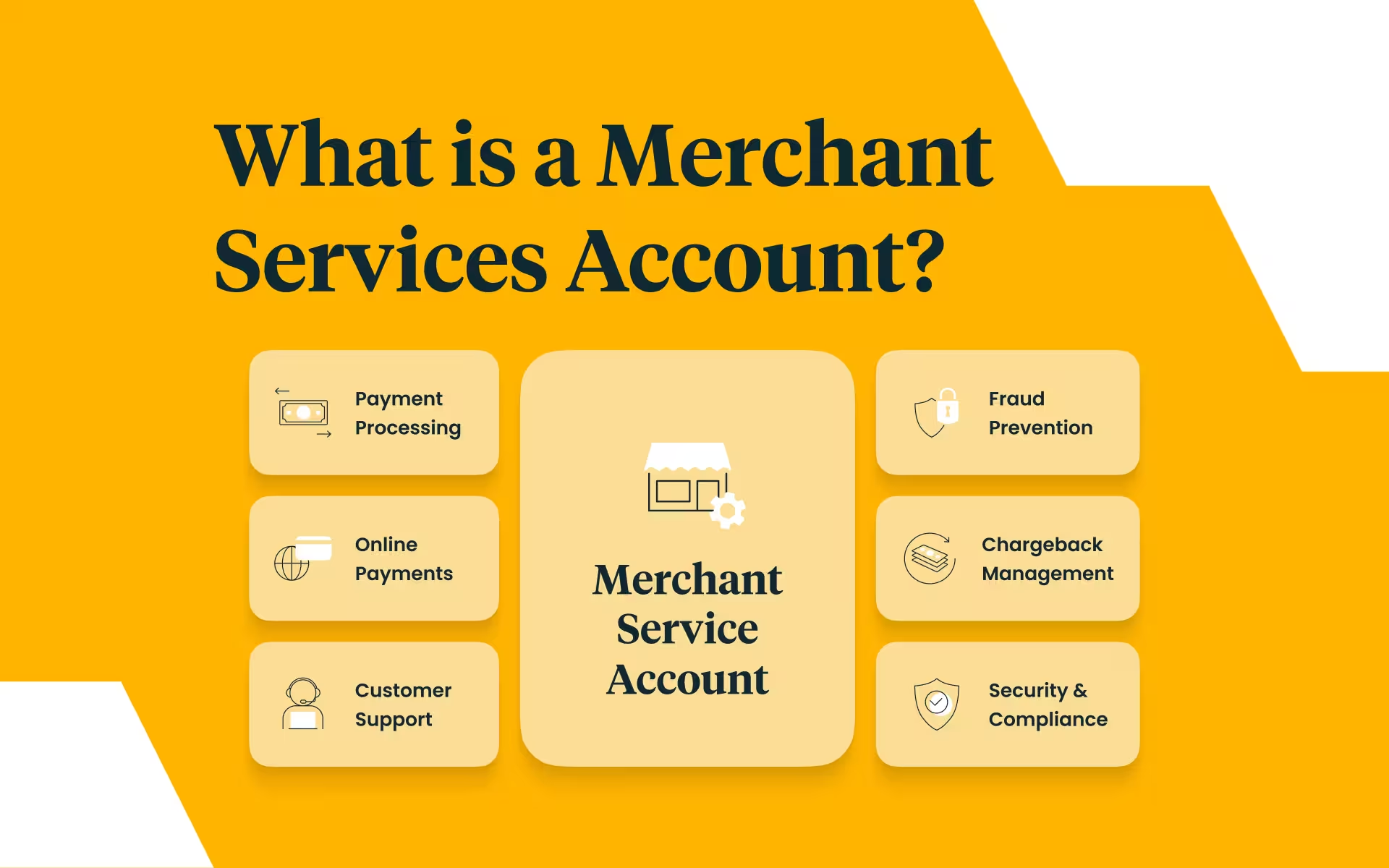
A merchant services account is a commercial relationship between a business and a payment services provider that enables the acceptance and processing of electronic payments with additional payment services such as compliance, fraud prevention and chargeback management. This relationship includes a merchant account for fund settlement, a payment gateway for transaction routing, and point-of-sale systems for payment capture. A merchant services account provides businesses with access to fraud prevention tools, chargeback management protocols and compliance frameworks required for payment card industry standards.
Payment processors like Paynt, Stripe, and traditional acquiring banks provide merchant services accounts with varying fee structures, integration capabilities, and service levels tailored to business size and transaction volume. Why businesses need a merchant services account are listed below.
Why do Businesses need a Merchant Services Account?
Businesses need a merchant services account to provide more features than traditional payment processing such as multi-channel payment acceptance methods, transaction security & compliance, reporting and analytics, and fraud detection. Why businesses need merchant services account are outlined below:
- Multi-channel payment processing: A merchant services account gives businesses the ability to accept payments across in-store terminals, e-commerce platforms, mobile applications, and recurring billing systems through a unified sales system.
- Payment acceptance capabilities: Businesses gain the ability to process Visa, Mastercard, American Express transactions through integrated point-of-sale systems, online payment gateways, and mobile card readers.
- Transaction security and fraud protection: Businesses gain security from PCI DSS compliance, tokenisation systems, and fraud detection algorithms that help protect businesses from data breaches, and unauthorised transactions.
- Settlement and cash flow management: Funds from customer payments are deposited into the business’s bank account within 1 to 3 business days.
- Chargeback management and dispute resolution: A merchant services account can offer dispute resolution tools, and protection programs that help businesses contest invalid chargebacks and recover revenue.
- Reporting and analytics tools: Transaction data is accessible through dashboards that track sales volume, payment methods, customer purchase patterns, and processing fees for financial planning and tax preparation.
- Customer payment preferences: Service providers enable businesses to accept payments that match consumers preferences such as card payments, digital wallets like Apple Pay and Google Pay, pay-by-link or subscription billing.
What is the difference between a Merchant Services Account vs a Merchant Account?
The difference between a merchant services account and a merchant account is that a merchant services account is the overarching commercial relationship with a merchant services provider that provides businesses with the complete infrastructure for payment processing, whilst a merchant account is a specialised bank account used specifically for accepting customer payments through credit cards, debit cards, and electronic transfers.
The merchant services account functions as an account with a service provider that includes the merchant account, payment gateway, point-of-sale terminals, fraud detection systems, and compliance management tools. The merchant account is a specific bank account that temporarily stores funds from completed transactions before transferring them to the merchant’s primary business bank account after deduction of processing fees.
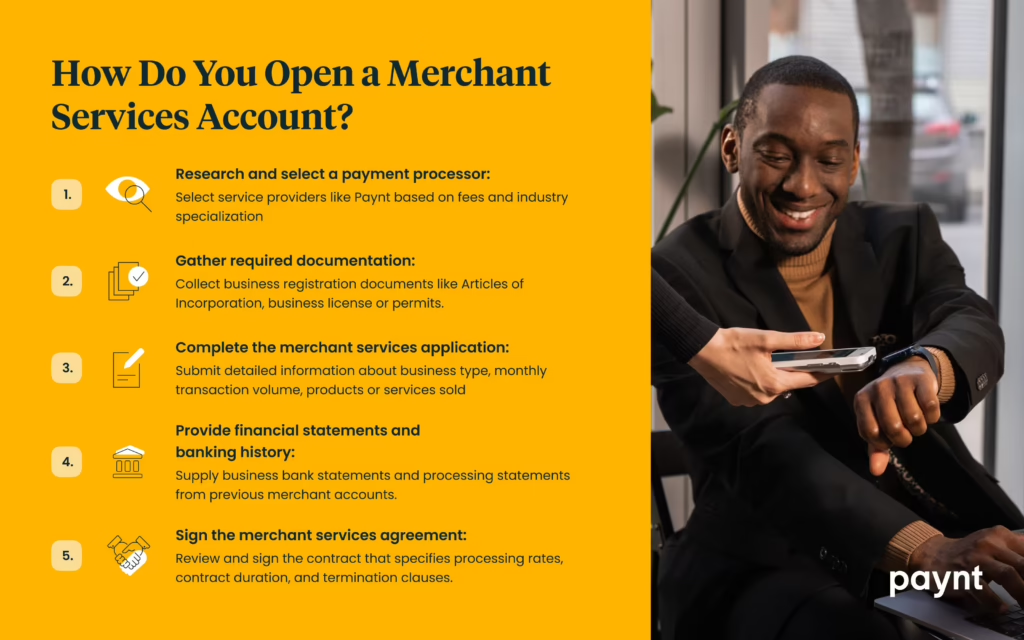
How Do You Open a Merchant Services Account?
Opening a merchant services account requires businesses to submit an application to a payment processor or acquiring bank, provide documentation that verifies business legitimacy, and undergo an underwriting review process that assesses risk factors. To open a merchant services account follow the 5 steps below:
- Research and select a payment processor: Compare providers like Paynt and traditional acquiring banks based on processing fees, contract terms, industry specialisation, and integration capabilities with existing business systems.
- Gather required documentation: Provide the documents required for Know Your Customer (KYC) verification, including proof of business registration such as a Certificate of Incorporation, your Unique Taxpayer Reference (UTR) from HMRC, business bank account details for settlement, and government-issued identification for business owners or directors.
- Complete the merchant services application: Submit detailed information about business type, estimated monthly transaction volume, products or services sold, and business history.
- Provide financial statements and banking history: Supply business bank statements from the previous 3 to 6 months.
- Sign the merchant services agreement: Review and sign the contract that specifies processing rates, monthly fees, equipment costs, contract duration and termination clauses.
What are the Different Types of Merchant Service Account Fees?
Depending on the merchant service account provider you choose there will be multiple merchant service account fees based on what services you select for your business. The fees of Merchant Services Accounts are listed below:
- Interchange fees: Rates set by card networks and paid to issuing banks, typically ranging from 1.5% to 3.5% per transaction based on card type, transaction method, and merchant category code.
- Processor markup: The payment processor’s profit margin added to interchange and assessment fees. This markup is structured as flat-rate pricing, interchange-plus pricing, or tiered pricing models depending on provider and contract terms.
- Monthly account fees: Recurring charges for maintaining the merchant services account, typically ranging from £10 to £50 per month depending on provider and included services like reporting tools.
- Chargeback fees: Penalties charged per disputed transaction to cover administrative costs for dispute investigation and documentation review with card networks.
- Batch fees: Charges applied each time merchants close daily transaction batches for settlement. Some providers include unlimited batching in monthly fees.
- Equipment costs: Upfront purchase prices or monthly lease payments for point-of-sale terminals, card readers, and payment hardware:
- Early termination fees: Penalties for canceling merchant services contracts before expiration:
- PCI compliance fees: Annual or monthly charges ranging from £50 to £200 for maintaining Payment Card Industry Data Security Standards compliance through security scans, self-assessment questionnaires, and certification documentation.
What is a Merchant Services Account Provider?
A merchant services account provider is a financial intermediary that enables businesses to accept and process credit card and electronic payment transactions alongside providing payment services such as security & compliance, fraud prevention and customer support. This provider facilitates the transfer of funds from customer payments through payment gateways, authorisation systems, and settlement mechanisms into the merchant’s business bank account. The merchant services account provider manages the technical infrastructure for transaction routing, maintains PCI DSS compliance frameworks, and administers the commercial relationship between the business and the payment processing ecosystem.
How Do You Choose the Best Merchant Services Account Provider?
To choose the best merchant services provider, follow the steps below:
- Assess business processing needs: Review monthly transaction volumes, average ticket size, industry-specific requirements, and growth projections to determine which pricing model and provider capabilities match business operations.
- Identify required payment methods and channels: Determine whether the business needs in-person terminals, online payment gateways, mobile card readers, digital wallet acceptance, recurring billing systems, or invoicing capabilities.
- Evaluate pricing models and cost structure: Compare interchange-plus pricing, flat-rate pricing, and tiered pricing structures by calculating total effective rate including transaction fees, monthly fees, gateway fees, chargeback fees, and equipment costs.
- Assess settlement speed: Compare settlement timeframes such as next-business-day deposits versus standard 2 to 3 business day settlements.
- Verify security and compliance standards: Confirm the provider maintains PCI DSS compliance, implements tokenisation and end-to-end encryption, offers point-to-point encryption for card-present transactions, and provides fraud monitoring and chargeback alert systems.
- Check system compatibility and integration: Examine whether the provider integrates with existing point-of-sale systems, e-commerce platforms, accounting software, inventory management systems, and CRM platforms through APIs or native integrations.
- Evaluate reporting and analytics tools: Review transaction-level reporting, chargeback tracking, real-time sales dashboards, and analytics that identify transaction trends.
- Assess customer support quality: Evaluate availability hours and support channels including telephone, email, and live chat.
- Test provider systems and capabilities: Request product demonstrations, access sandbox environments to test integrations, and process sample transactions during trial periods.
- Negotiate contract terms and pricing: Compare written proposals that itemise every fee, review contract lengths and termination clauses, document negotiated rates, and confirm policies for fee adjustments as transaction volumes increase.
What are Popular Merchant Account Services for Retail Businesses?
Retail businesses typically choose merchant account providers that support in-store card payments, POS integrations, omnichannel sales, competitive processing fees and chargeback & fraud prevention. Retail businesses need a merchant services account to process in-store card transactions, accept contactless payments, and capture sales from customers who prefer electronic payment methods over cash.
For retail businesses with e-commerce platforms, an account that delivers online payment capabilities alongside physical storefronts are popular features. Retail merchants require chargeback management and fraud protection services that identify suspicious transactions, prevent card-not-present fraud in online orders, and provide dispute resolution support for customer payment disputes.
